
Editorial
Towards Sustainability
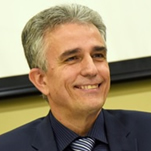
Prof. Dr. Marco Aurélio Zezzi Arruda
Full Professor at the Dept. of Analytical Chemistry, Institute of Chemistry at the University of Campinas, SP, Brazil
BrJAC Editor-in-Chief
“Within the context of sustainable development, this volume of the BrJAC is prone to a diversity of applications towards sustainability that involve methods employing small volumes, low-cost sensors, minimalist techniques and the importance of teaching metrology, among others. It is time to enjoy the reading of this issue and take into consideration the important aspects for the next application of our research work, which may involve environmental protection, circular economy and resource sustainability, the so-called sustainability triad (Environment, Economy and Society). Onwards to sustainability!” read more
Interview

Professor José Luis Capelo Martinez, a researcher who believes that science and technology have a direct and tangible impact on human well-being kindly granted BrJAC an interview
Prof. Dr. José Luis Capelo Martinez
Associate Professor at the University NOVA of Lisbon, Lisbon, Portugal
“…research is not just an academic pursuit but a powerful tool for addressing pressing societal issues. It's a commitment to using my abilities to contribute to the greater good, to extend a helping hand to those in need, and to make a meaningful difference in the lives of individuals and communities.” read more
Point of View
Teaching Experimental Instrumental Analytical Chemistry – Are we forming professionals, training operators or illuding students (and ourselves)?
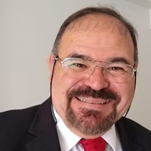
Prof. Dr. Fabio Augusto
Full Professor of the Department of Analytical Chemistry at the Institute of Chemistry, University of Campinas, SP, Brazil
“Perhaps one of the biggest mistakes we make with our current students is that we consider them ill-prepared or less capable than our generation and attribute their difficulties to this simplistic, crude verdict – when perhaps the biggest problem is that, as educators, we are failing to cope with the rapid evolution in the characteristics and profiles of these young people.” read more
Letter
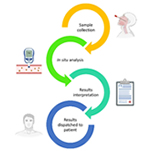
Electrochemical Biosensors for the Detection of Viruses: Must-Have Products or Just Science for Publication?
Brazaca, L. C.; Bonacin, J. A.; Muñoz, R. A. A.; Janegitz, B. C.; Carrilho, E.
“The SARS-CoV-2 pandemic has brought significant light to the urgent need for rapid, precise, and low-cost diagnosis tools. The scientific community has responded as quickly, overflowing the literature with papers describing interesting biosensors for aiding in the diagnosis of COVID-19. However, almost none of them, mainly the electrochemical ones have reached the market or never will, with only a few traditional formats used in the daily combat of the virus, including ELISA, lateral flow assays, and, mainly, PCR.” read more
 34th BrJAC Webinar: ICP-Mass Spectrometry in the Biomedical Sciences: Work Horse or Race Horse?
 33rd BrJAC Webinar: Advanced X-ray analytical techniques with synchrotron radiation applied to research studies on agro-environmental sciences, biology, and nanotoxicology
 32nd BrJAC Webinar: Harnessing Inorganic Nanoparticles for Innovative Applications
 31st BrJAC Webinar: Smoking an Analytical Chemistry Perspective
 30th BrJAC Webinar: Solving Analytical Chemistry’s Complex Puzzles with Mass Spectrometry
 29th BrJAC Webinar: Metrology Platforms for the Characterisation of Nanomaterials to Support Existing Regulations
 28th BrJAC Webinar: Exploring Magnetic Ionic Liquids for Trace Elements Preconcentration and Speciation Analysis
  27th BrJAC Webinar: Some Applications of Atomic Spectrometry for Nutritional, Medicine and Forensic Studies
 26th Round Table Discussion: Quo vadis, Analytical Chemistry?
 25th BrJAC Webinar: Elemental Bioimaging at Micro and Nanoscale
 24th Webinar: Photochemical vapor generation for elemental analysis: The road so far…
 23rd Webinar: 3D-printed microFIA: The new generation of flow analysis
 22nd Webinar: A Brief History of Electroanalysis in the World and in Brazil
 21st Webinar: Analysis of High Carbon Content Samples: Challenges and Options
 20st Webinar: The use of 3D Printing for Sensors Development
 19th Webinar: Omic and Meta-omic Methodologies to Delve into the Metals-Metabolites-Microbiota Intertwined Mechanisms
 18th Webinar: In situ fractionation and speciation analysis of waters using the Diffusive Gradients in Thin films (DGT) technique: from classical to recent approaches
 17th Webinar: Assessing the Fate and Impacts of Pesticides in the Environment – Key Points from Chemistry Perspectives
 16th Webinar: 3D Printing as a Powerful Tool for the Fabrication of Microfluidic Analytical Devices
 15th Webinar: Challenges and Opportunities for Characterization of Fine Particulate Matter Indoors
 14th Webinar: Forensic Analytical Chemistry and its Relevance in the Chain of Custody: The Importance of Science in Ensuring Justice
 13th Webinar: Headspace Solid Phase Microextraction Applied to Analysis of Compounds with Low Volatility
 12th Webinar: Advances for the Elemental Determination by Mass Spectrometry Detection Following the Green Chemistry Recommendation
 11th Webinar: Fundamentals and eco-efficient applications of rotating-disk sorptive extraction
 10th Webinar: Chemometrics applied to Liquid and Supercritical Fluid Chromatography: The new era of Analytical
  9th Webinar: From Flow Injection to Microfluidics: Our Contribution to Food and Environmental Analysis
 8th Webinar: Turning Paper and other Low-Cost Materials into Analytical Sensor Devices for In-Field Applications
 7th Webinar: Restricted Access Materials in Biological Sample Preparation for the Determination of Metals and Organic Molecules
 6th Webinar: Analytical Chemistry Driven Personalised Medicine
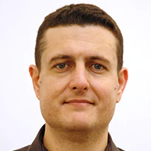 5th Webinar: Re-Imagining Standard Additions and InternalStandardization for More Efficient Calibration Methods
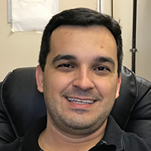 4th Webinar: Portable Analytical Tools for Bioanalytical and Forensic Applications
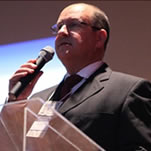 3rd Webinar: Analytical Strategies for Environmental and Ecotoxicological Studies
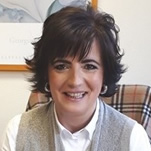 2nd Webinar: Analysis of Clinical Biomarkers by ICP-MS: From Speciation to Single-Cell Approaches
 1st Webinar: Development and Application of Methods for the Determination of Residues and Contaminants in Food and Environmental Samples
 Dr. Carla Toledo Neira
 Prof. Dr. Márcia Andrea M. S. Veiga
 Prof. Dr. Gilberto Abate
 Dr. Marcos Aurelio Gomes da Silva
 Dr. Heldiane Souza dos Santos
 Izabel Azevedo de Lemos
 Profa. Dra. Camila Boldrini Nascimento
 Prof. Dr. Willian Toito Suarez
 Giovanni Gomes Daniele
 Marinara Andreola
 Prof. Dr. Eduardo S. Chaves
 Hyrlam Sousa Ferreira
 Izabel Azevedo de Lemos
 Mônica Lopes Ferreira
 Thayná Iasmim Oliveira Duarte
 Dr. Priscilla Oliveira
 Naldirene do Nascimento Fonseca, MSc
 Giovanni Gomes Daniele
 Cecilia Correia Pereira
 Thalles Pedrosa Lisboa, PhD
 Vinícius Picoloto de Souza
 José Vinicius Martins
 Vinnícius Henrique Cerqueira da Silva
 Prof. Dr. Dirce Pozebon
 Prof. Dr. Beatriz C Barja
 Prof. Dr. Virgínia Claudia Paulino Silva
 Luciane Effting
 Dr. Thallis Martins Souza
 Prof. Dr. Dirce Pozebon
 Beatriz dos Santos Cugnasca
 Prof. Dr. Mariana Paranhos Stelling